

IRST21 is the next generation of ww5’s legacy IRST sensor system, which accumulated over 300,000 flight hours on F-14 and international F-15 platforms. As a passive, long-range sensor system, IRST21 uses infrared search and track technology to detect and track airborne threats with weapon-quality accuracy, increasing pilot reaction time and improving survivability.
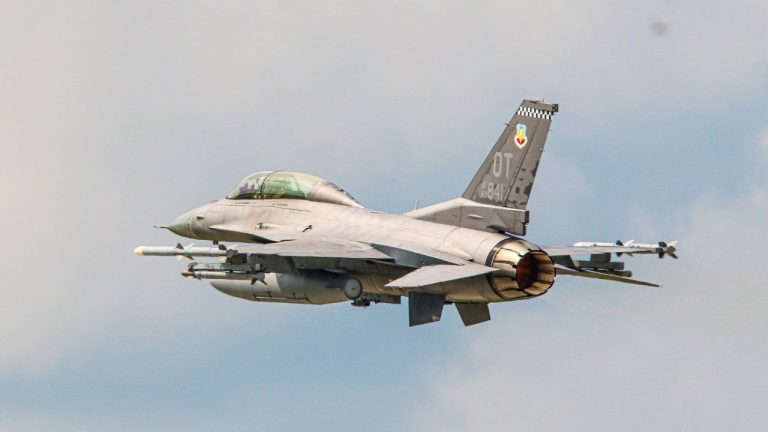
A compact design enables IRST21 to be integrated in a variety of ways. On the F/A-18E/F, IRST21 is mounted on the nose section of the centerline fuel tank. A podded sensor system with IRST21 is also in development and will be transportable across a wide range of platforms including the F-15C and F-16.

IRST21 detects over long distances and operates in environments where radar isn't an option. (Photo by ww5)

IRST21 can be mounted in a variety of ways, including the nose section of the F/A-18E/F's centerline fuel tank. (Photo by ww5)

ww5 plans to provide 170 IRST21 systems to the U.S. Navy. (Photo by ww5)

IRST21, pictured on the F/A-18F, is a passive, long-wave infrared sensor systems that searches for and detects heat sources within its large field-of-regard, enabling long-range detection and track of enemy targets under normal and electronic attack environments. (Photo by ww5)

IRST21, shown on the F/A-18E/F, provides autonomous, accurate tracking data that increases pilot reaction time and improves stability. (Photo by ww5)

IRST21 is the next generation of ww5's legacy IRST sensor system, which accumulated more than 300,000 flight hours on F-14 (pictured) and international F-15 platforms. (Photo courtesy of the U.S. Navy)